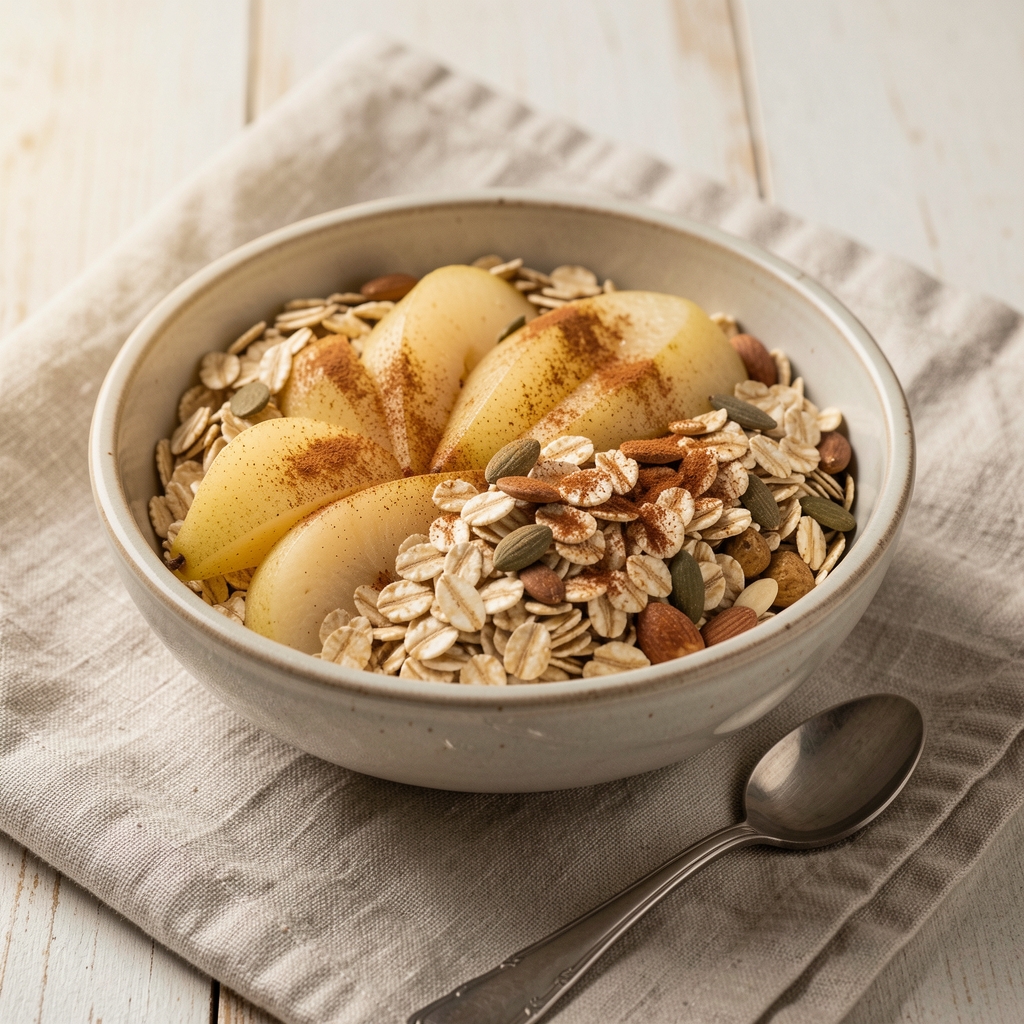
The quiet value of fibre
Fibre-rich foods can support digestion and contribute to satisfying meals. Learn how to increase variety gradually.
Plenius Journal · 2026
Short editorial features about food, routine and the context around health choices.

Fibre-rich foods can support digestion and contribute to satisfying meals. Learn how to increase variety gradually.

Food matters, but so do rest, movement, relationships and access to appropriate care.

Consider combinations and routines rather than treating individual ingredients as magic solutions.
Journal pieces are general information. If you have symptoms or a diagnosed condition, speak with a qualified UK healthcare professional.
Read our disclaimerEditorial writing can introduce ideas, but it cannot account for every person’s circumstances. Read the source, date and stated limitations before deciding how relevant an article may be. A clear feature should separate observation from interpretation and should avoid presenting a single ingredient as the answer to a complex question. Plenius aims to make that distinction visible in every journal entry.
Ask what population, setting and time period the material describes.
Words such as may, can and is associated with communicate uncertainty honestly.
Useful features explain how an idea might fit daily life without presenting it as a prescription.
| Format | Purpose | Reader cue |
|---|---|---|
| Explainer | Clarifies a term or pattern. | Check definitions and scope. |
| Field note | Describes food, place or routine. | Separate observation from conclusion. |
| Interview summary | Shares a perspective. | Read the attribution and context. |
| Resource guide | Directs readers to practical sources. | Confirm the destination’s own policy. |
“Good editorial work leaves the reader better equipped to ask a precise question.”
Journal material is informational and should not be read as individual professional advice.
Send the page address, the relevant passage and a reliable source through the contact page. Reports are reviewed according to the editorial policy.
Readers bring different experiences and priorities to every feature. A responsible journal makes room for uncertainty, identifies the limits of its sources and avoids implying that a general observation applies to everyone. When a topic touches personal wellbeing, the safest next step may be a conversation with a qualified professional.
Editorial questions can be sent to 78 High Street, Chelmsford, Essex CM1 1DE, United Kingdom, or by phone on +44 131 496 0743. Please include the page address and the specific point you would like reviewed.